Redesigning Search: Building A Music Discovery App - 4
Documenting the lessons from redesigning search for our discovery system outlined in “Bit Of This, Bit Of That: Revisiting Search & Discovery”
 Photo by Joshua Olsen on Unsplash
Disclaimer 1: This post is in continuation of the last post about building a music discovery platform based on our paper: Bit Of This, Bit Of That: Revisiting Search and Discovery
Disclaimer 2: You can explore our music discovery platform, This & That Music, here: https://discover.thisandthatmusic.com/.
Oh, genre-fluid music, you defy all bounds,
Where rhythms converge in limitless sounds.
You are the rebel sonnet, the free verse tune,
The synthesis of styles under the same moon.
Brief Summary
In the last few posts, based on our paper, we described building a music platform centred around genre-fluid search and discovery. This post will break from the usual technical setup discussion and focus on the platform's user interface and experience. Before that, however, it's essential to explore how music platforms manage music discovery, their limitations, and what changes are necessary to adapt to the evolving music landscape.
The rise of online music streaming apps has granted us access to millions of songs. However, this abundance also poses a challenge in navigating one's music library. Most music apps provide features such as playlist mixes, smart shuffles, autoplay, artist stations, and song radios to handle music discovery in a world where hundreds of thousands of songs are uploaded daily(!). These are convenient and provide a hands-off approach; however, they lack support for active curation.
A music search and discovery interface typically consists of two main components:
- Text Search: This is used for focused searches like artist, album, song, or activity names.
- Browse Section: This section is used for exploratory searches, and it is meant for exploring different musical categories, such as genres, moods, themes, and activities.
There is also another type of search called Open search. This type of search differs from the other two because only the initial seed of the search is known beforehand. Since the query is not fully known initially, it may require multiple refinements after the initial specification. This query often requires utilizing both the text search and the browsing through the results for a query-feedback loop until the desired music is found.
Genre Fluidity
One such open search is the genre-fluid search, where the query may look like "rock songs with a little bit of metal for running." While it may be easy to look for one of the many available contextual and thematic playlists, such as "Rock running playlists" or even "Rock Metal running playlists", they lack the control required to create a mix suited to the user for that specific context. In recent decades, genre fluidity has become increasingly prominent on the Billboard charts. However, search interfaces have not adapted to this trend. As a result, genre fluidity is mainly addressed through recommendations and curated playlists.
Unbounded Search Space Problem
The main issue with search interfaces, which do provide some level of control, is their lack of query completion or expansion, which is crucial for music discovery. This issue, the Unbounded Search Space Problem, leads users towards simple, familiar searches due to increased cognitive load from limited exploitation suggestions near the search box. The abundance of thematic and contextual playlists on streaming platforms typically encourages users to start sessions with basic searches such as the artist's name, guiding subsequent radio stations or autoplay. This restricts user control and limits exploration to the initial search input. The alternative, creating playlists, demands significantly more effort.
O music of mingling, of styles unforeseen,
You are the unknown, the vast in-between.
One day, may they build a platform for you,
That embraces your breadth, both strange and true.
Design Considerations
Taking the previous sections into consideration, we set out to redesign the existing search with the following principles:
Query Assistance: The interface should help users expand their queries, narrow the search space, and provide a more collaborative, dynamic, interactive search experience.
Search Anchors: The interface should support familiar search anchors besides genres, such as activities (e.g., Focus, Workout) and artists, to help the user ground the query in a familiar context.
Query Revision Controls: The interface should offer intuitive controls for query revision, allowing users to adjust their searches as needed.
Familiarity: The interface should be compatible with existing interfaces, ensuring user familiarity.
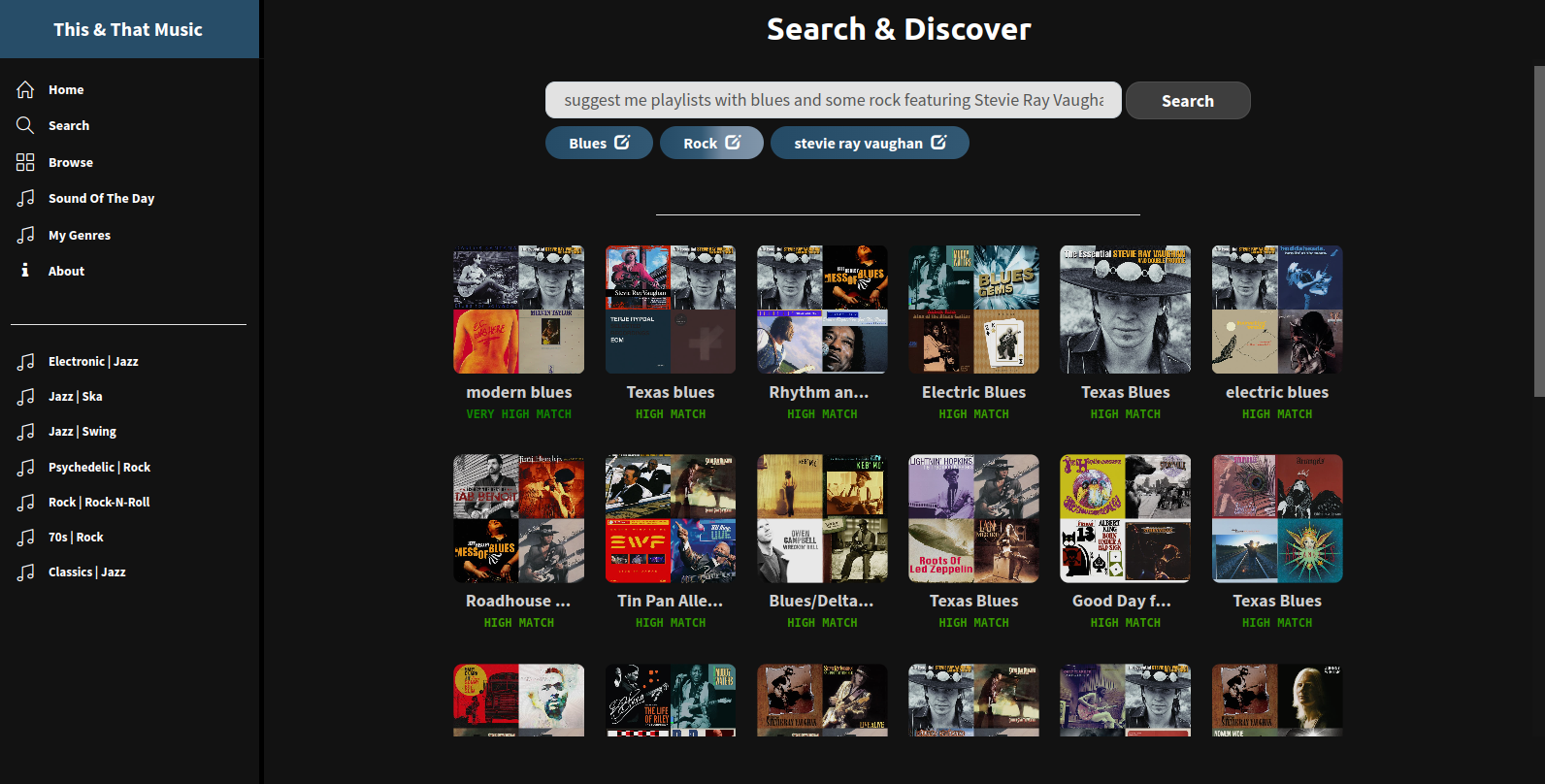
Figure 1: Our proposed search and discovery interface
Design Overview
As seen in Figure 1, central to our interface is the text search box where users can input their queries. Upon entering a query, entity tags are displayed underneath the search box, representing the query elements such as genres, activities, or artists. Users can add up to three genres at a time, with the ability to specify their weights using natural language qualifiers like "a little bit of Jazz" or "some rock."
Users can then finetune their search by adjusting the weight of each genre or removing genres as needed. This adjustment is done through a modal window that appears when any of the added tags is clicked. Additionally, our system dynamically suggests genre combinations and artist anchor tags based on the entered query, which expands the query and re-triggers the search when clicked. Example queries supported by our system are "Playlist featuring blues with a bit of rock for a road trip" and "Electronic indie-rock playlists featuring Mac Demarco."
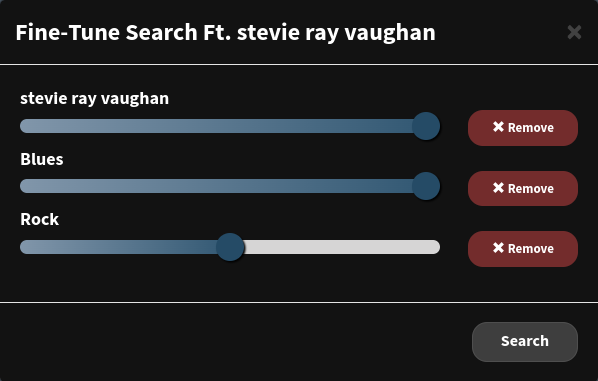
Figure 2: Query revision modal window featuring slider-based controls to adjust genre contributions to the query
To emulate the complete experience of a music app, our platform also includes pages such as a home page, browse page, item detail pages (artists, tracks, and playlists) with genre info and related items, and dedicated genre pages.
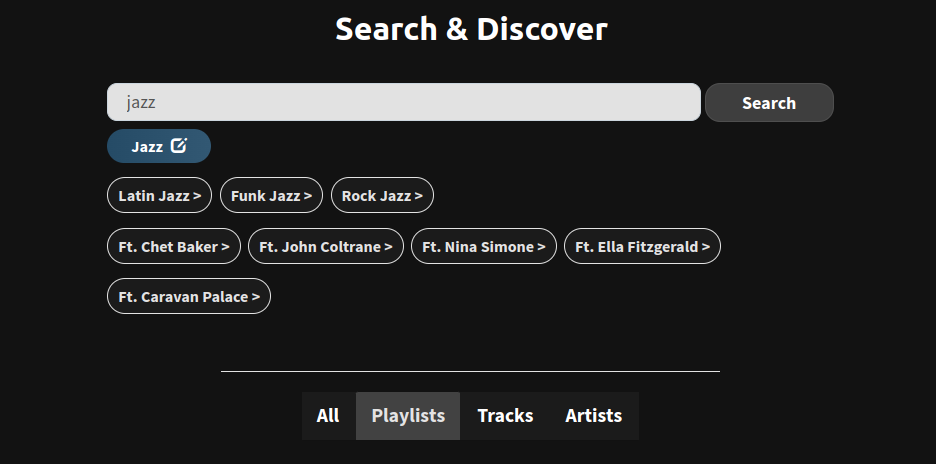
Figure 3: Clickable suggestion tags displayed based on the input query 'jazz'
Design Features
Our design comprises of three primary features:
1. Query Composition
This feature allows for query specification using natural language. The proposed search facilitates various search options, enabling users to combine genres, artists, and activities with standard keyword-based searches.
2. Clickable Tags
Each query element creates a tag underneath the search box, which, when clicked, opens a modal, illustrated in Figure 3. The gradient of the entity tag changes according to its contribution level, visually representing the entity's impact on the query, as seen in Figure 1.
3. Adjustable Contribution
Clicking on an entity tag opens a modal, illustrated in Figure 2. This modal displays each added entity alongside a slider, allowing users to adjust the entity's influence on the main query. Users can remove an entity by clicking the Remove icon adjacent to the slider. The contribution range for each entity is adjustable from 1 to 4, with 1 indicating minimal influence and four the maximum.
Assistive Design Features
1. Query Expansion Suggestion
Our platform displays suggestions for query expansion, aiming to refine the search, thus narrowing the search space. For example, the query 'Blues' yields the following suggestions:
- Genre-based: Blues Rock, Folk Blues, and
- Artist anchors: BB King, Fats Domino.
2. Additional Anchor Search Dimensions
Beyond genres and artist anchors, we incorporate activities (e.g., Road Trip) as search dimensions. This allows for multifaceted queries, like "Suggest me a blues playlist with some rock and jazz for a road trip."
3. Relevancy Information
We display the degree of match between the user's query and the search results underneath each search result's name. A coloured text strip indicates this five-point Likert scale relevancy, ranging from light yellow (very low match) to dark green (very high match).
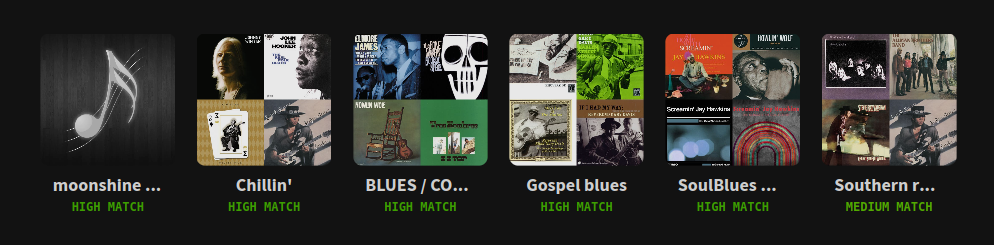
Figure 4: Relevancy information shown for each result item.
4. Placeholder Texts
The search box showcases rotating placeholder texts featuring various example queries. Examples include "Morning Jazz playlists," "Hip-hop road trip playlists," and "R&B pop night playlists," offering users hints for potential searches.
5. Fuzzy Search
We implemented fuzzy search to account for variations in user query and genre names.
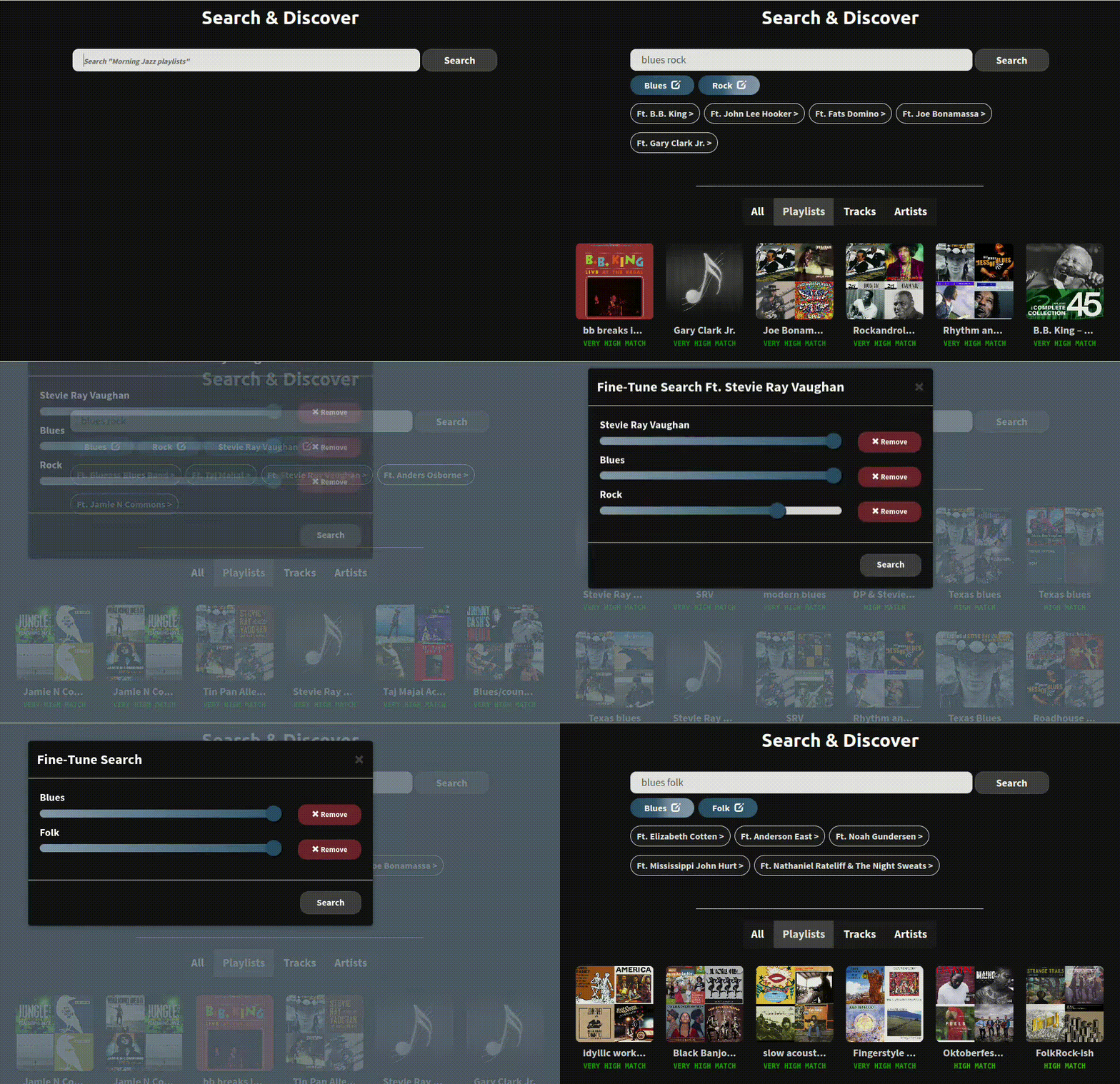
Figure 5: Demo showing clickable tags and adjustable composition in action.
General Feedback
To get feedback on our design, we interviewed 15 participants, ranging from everyday listeners to experts, in terms of their musical sophisticatedness. We then performed an inductive thematic analysis from the semi-structured interviews and coded the responses to determine the emerging themes, which were as follows:
- Query assistance feedback
- Genres are not enough
- Accommodating bibliographic searches.
The first theme relates to the limitations of current search interfaces in facilitating genre-fluid searches and how they can be improved, while the second and third themes add feedback to our proposed design elements.
1. Query Assistance
Most participants enjoyed the clickable query suggestions, which enabled them to expand on their query without thinking about how to do it or type it out. One participant said, "It made querying to discover music easier, as the suggestions are right there without too much effort. Usually, I do not even think about wanting to go in these directions when I am searching for something."
2. Genres Are Not Enough
The most common feedback from the study was that genres are not the most preferred way for them to search for music.
One participant, an everyday listener, shared, "As someone unfamiliar with genres, I don't see myself using this frequently. I would prefer suggestions based on mood or activities that I understand."
Another participant, a knowledgeable everyday listener, stated, "The system presented results from a combination of two genres were not to my preference as they were from a different era. The search results and the suggested anchor artists were not personalized. Additionally, I could not specify that I wanted to listen to fringe artists, not popular ones, as they are already familiar."
Lastly, an expert participant shared, "My searches would be more intricate than just a genre and an artist. I would like to search using a combination of sub-genre [teutonic thrash metal], similarity to an artist [Kreator], and a musical attribute [guitar riffs, tempo]."
3. Bibliographic searches
Most participants said they do not generally search for genres, let alone gene-fluid music. Instead of being suggested anchor artists based on genres, they prefer genre-based suggestions based on their artist search. "I listen to Bob Dylan, so I would prefer suggestions based on different phases of his career, ranging from acoustic folk to electric rock and approach genre-fluidity from that direction".
Design Implications
Given the feedback, we now focus on how search interfaces can be redesigned to better support genre-fluid discovery. If we were to rank search dimensions by their level of abstraction for music, it would look like this:
- Music properties such as energy, BPM, and valence - concrete, measurable traits.
- Genres such as Country, Blues, and Rock - categories with shared musical characteristics.
- Emotions such as sad, happy, and angry - subjective feelings influenced by the music.
- Activities such as workout, focus, and road trips - contextual and situational uses of music.
- Artists such as Bob Dylan and Frank Zappa - figures who transcend genres and contexts.
Users utilize these dimensions variably based on their musical knowledge and preferences to approach genre fluidity. Consequently, our design suggestions aim to offer a user-centric pathway towards genre-fluidity tailored to individual preferences.
- Personalized Search Assistance: The search interfaces should facilitate query completion and expansion while still allowing users to steer their search. The query assistance must also be convenient and personalized to the user, whether it's through suggestions, search dimensions, or anchor artists.
- Utilizing Bibliographic Searches: The search interface should suggest various genre paths users can explore, using their searched artist as a focal point. For example, if a user searches for Bob Dylan, the interface could suggest genres like Folk Rock ft. Bob Dylan, Acoustic Folk ft. Bob Dylan and Electric Rock ft. Bob Dylan.
Conclusion
We designed a novel search interface to enhance genre-fluid music search capabilities. Although the participants liked our interface and its idea, there was still some scepticism regarding whether they would adopt this long-term. We see a lot of room for improvement in simplifying and enhancing the interface and adding more search dimensions and personalization features.
Until the next design.
Ready to explore genre-fluid music? Visit our music discovery platform, This & Thats Music, here: https://discover.thisandthatmusic.com/

Piyush Papreja
Software Developer
My research interests include music information retrieval, recommendation systems and web.